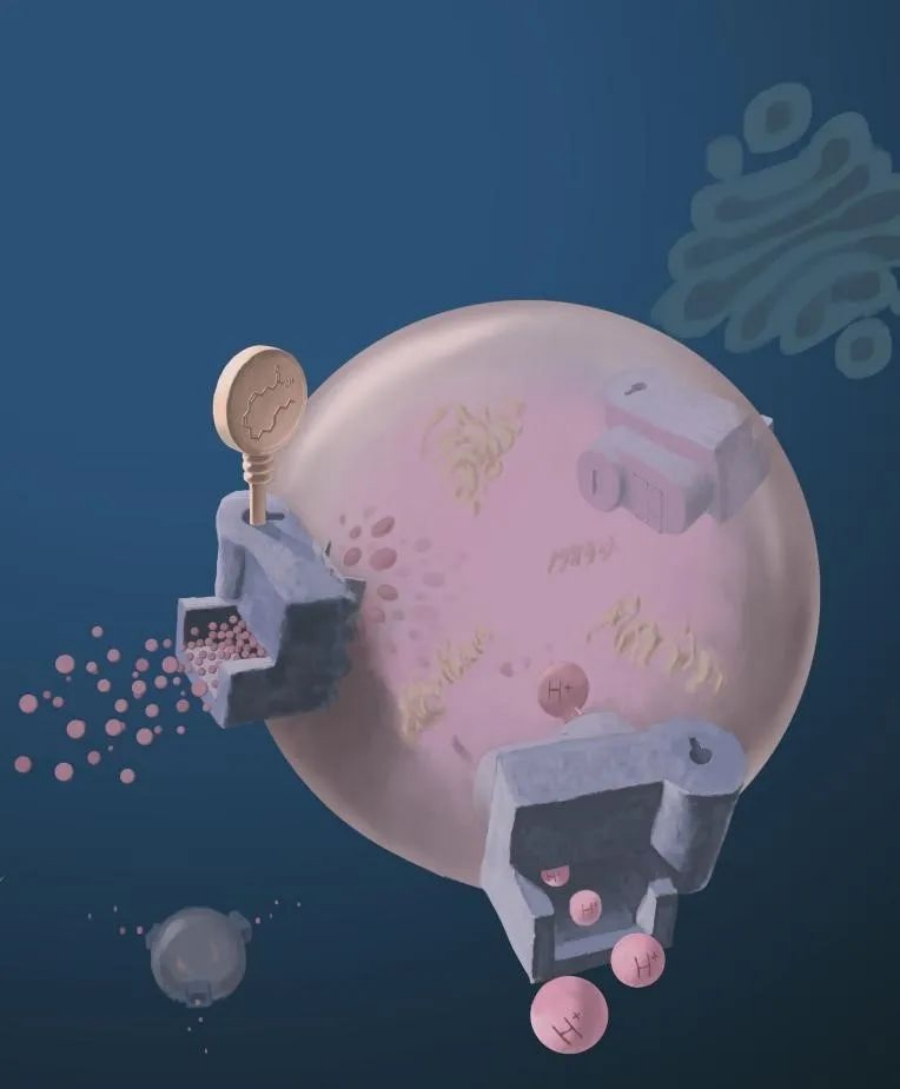
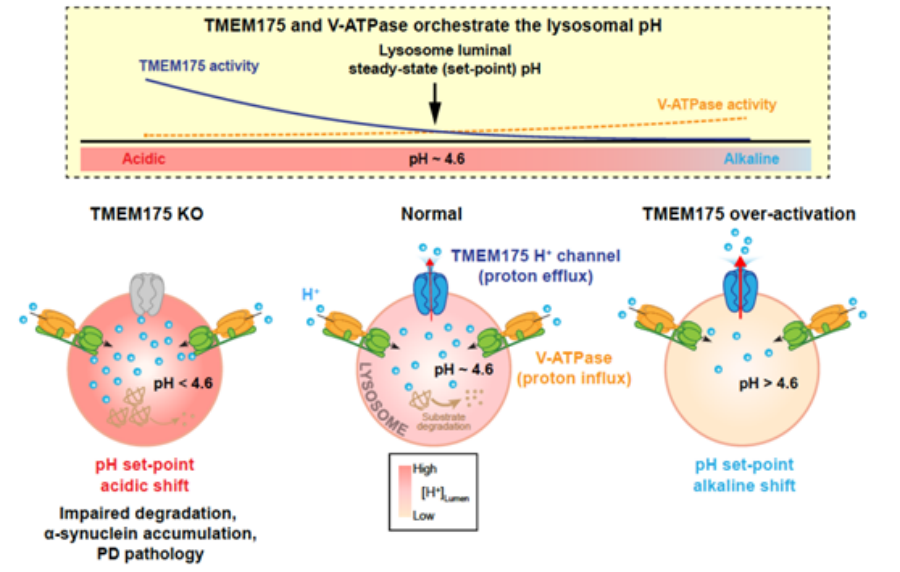
Recently, the lysosomal new drug research team of Yangtze River Delta Collaborative Innovation Center of Yangtze River Delta Region Green Pharmaceuticals of ZJUT cooperated with the team of Professor Xu Haoxin from The University of Michigan, and found the key channel proteins of lysosomes to maintain its acidic environment and revealed its potential association with Parkinson's disease. It was found that TMEM175, a risk gene for Parkinson's disease, is a hydrogen ion channel activated by hydrogen ions located in lysosomes, and its mutation is one of the key factors that may induce Parkinson's disease.
Related research results were titled Parkinson's Disease-risk Protein TMEM175 Is a Proton-activated Proton Channel in Lysosomes, Published in Cell on June 23, this is the first time that our research results have been published in Cell. Dr. Hu Meiqin is the first author and co-corresponding author of the paper, Dr. Li Ping is the co-author of the paper, And Dr. Feng Xinghua is the main author of the paper. Professor Xu Haoxin from The University of Michigan, who has cooperated with ZJUT for many years, is the corresponding author.
Since cooperating with Professor Xu Haoxin's team, the lysosomal drug research team has published 12 top academic papers in several high-level journals including Nature and Cell, PNAS, eLife and PLoS Biology, which have attracted wide attention from the academic community, industry and society. In this work, the team, through long-term persistent, meticulous and rigorous lysosomal studies, finally uncovered the unknown important functions of TMEM175 and revealed its potential mechanism of inducing Parkinson's disease, adding a new paragraph to the cell biology textbook.